From 6th April 2026, HMRC will require sole trader businesses and landlords with qualifying income of £50,000 or above to keep financial records and submit their quarterly income & expenses details digitally.
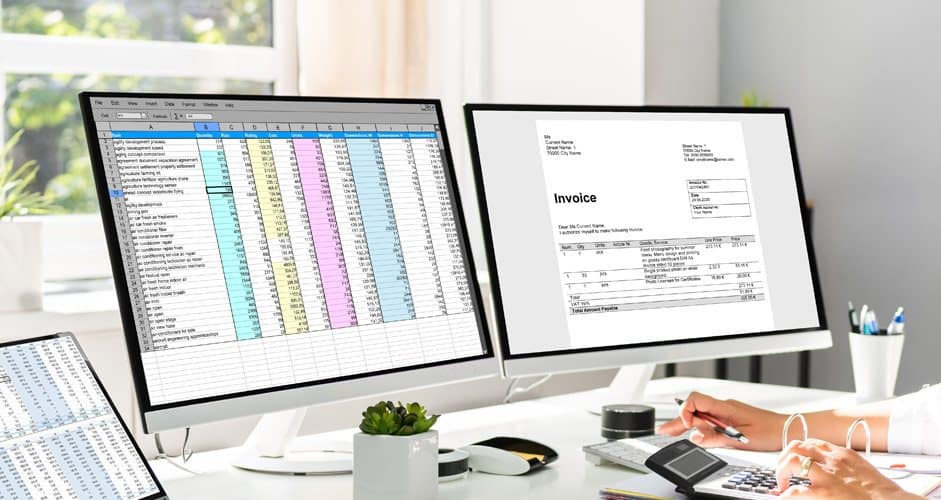
This means that accounting software or spreadsheets will need to be introduced if a paper-based accounting system is in use.
Our spreadsheets have always been designed to help small businesses switch from a big red cash book to a less time-consuming method of keeping your financial records. Most of our accounting templates are designed for various retail & cash-based businesses rather than larger companies needing sales ledger and purchase ledger systems.
From 2026 we will provide versions of our spreadsheets which will automatically calculate the quarterly data required to submit to HMRC as well as year end adjustments for the final submission.
We believe that the larger accounting software systems can be a bit daunting for smaller businesses, who want to keep track of sales and costs – often on a “money in and money out” basis – and be able to prepare quarterly trading figures data as simply as possible.
Our bookkeeping spreadsheet templates are an ideal way of complying with HMRC’s new digital record keeping demands and can be used in conjunction with “bridging software” to submit the data to HMRC.
Bridging software is software which communicates with HMRC to allow income tax data from a spreadsheet to be submitted to HMRC according to the requirements of MTD. There are currently a number of bridging software solutions available and more systems in development. A list of MTD software can be found at www.tax.service.gov.uk/making-tax-digital-software.
We are suggesting the bridging software from www.vitaltax.uk, which is an Excel Add-in available from the Microsoft store. It is well priced and will link with our spreadsheets if they are used in Excel 2013 or later. Have a look at their video – it’s a nice easy solution.